Chapter 1 of 7
Intro
We often celebrate success, striving for stability and comfort in our lives, our careers, and our businesses. But what if success itself is the most dangerous trap we can fall into?
What if the very comfort it brings blinds us to the subtle shifts that could render us, or our endeavors, completely obsolete?
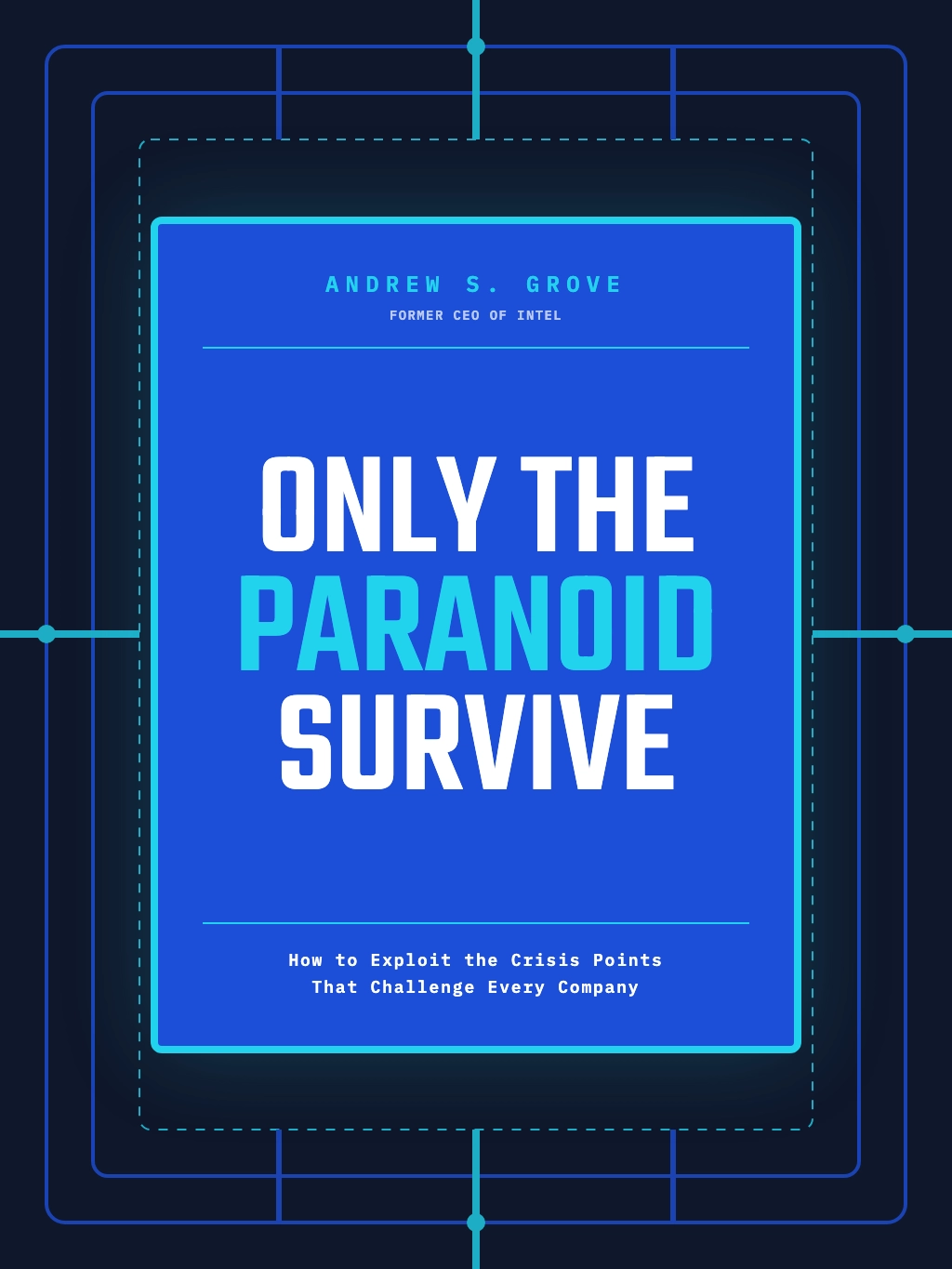
This is the uncomfortable truth that Andrew Grove, the legendary former CEO of Intel, explored in his seminal work, 'Only the Paranoid Survive'.
It's a book that challenges our fundamental assumptions about growth, stability, and what it truly takes to stay ahead in a world that's constantly, relentlessly changing.
Today, we're going to dive into why a healthy dose of what Grove called 'productive paranoia' isn't about living in fear.
Instead, it's about cultivating an acute awareness of change, and the courage to act decisively, even when things seem to be going perfectly well.
It's about understanding that the ground beneath us is always shifting, and our ability to thrive depends on our willingness to constantly re-evaluate and adapt. Andrew Grove's story is fascinating and deeply relevant to this book.
Chapter 2 of 7
He was a Hungarian immigrant who survived both Nazi and Soviet rule before coming to the United States. He co-founded Intel and led it through some of its most transformative periods, including the pivotal shift from memory chips to microprocessors.
This wasn't just a theoretical exercise for him; it was born from direct, often brutal, experience. He saw firsthand how quickly an industry leader could be brought to its knees if it failed to anticipate and respond to fundamental shifts.
The book, published in 1996, came out of a period where Intel itself faced an existential crisis, a 'strategic inflection point' as Grove called it. They had to make a radical decision to abandon their core memory business and go all-in on microprocessors.
This experience, this near-death moment, is what fueled the insights in 'Only the Paranoid Survive'. It's not just a business book; it's a philosophy for navigating uncertainty, applicable to almost any aspect of life.
One of the core ideas Grove introduces is what he calls 'The Illusion of Stable Ground'. This concept really hits home because it speaks to our deep human desire for comfort, routine, and certainty.
We build our lives, our careers, our businesses on what feels like solid, predictable ground. But Grove argues that this ground can suddenly become quicksand, demanding a radical shift in perspective and strategy, often when we least expect it.
The tension here is palpable: our innate need for stability versus the unsettling reality that the world is in a constant state of flux, often with little warning. It's the struggle to acknowledge subtle signs of change before they become undeniable crises.
Chapter 3 of 7
Think about a company like Blockbuster, which was once incredibly dominant with its physical rental model. They saw the early signs of streaming, they even had opportunities to acquire Netflix.
But they were too comfortable, too invested in their existing infrastructure and their highly profitable business model, to truly adapt. The ground shifted beneath them, and they were left behind, a stark reminder of this illusion.
It's like sailing on a calm, familiar lake, confident in your course, enjoying the journey.
But beneath the surface, unseen currents are slowly but surely pulling you towards a powerful river that will demand a completely different kind of navigation, or risk capsizing.
And this is where the book starts to go deeper, introducing the idea of 'Embracing Productive Paranoia'. Grove isn't advocating for a debilitating fear, but rather a proactive, almost obsessive, vigilance.
He suggests that true resilience and sustained success come not from ignoring potential threats, but from actively seeking them out. It means questioning assumptions and preparing for disruption, even when everything appears to be going well.
The tension here is between our natural human inclination to avoid negativity and focus on current achievements, versus the uncomfortable but necessary practice of constantly asking 'what if?'
Chapter 4 of 7
It's about anticipating challenges that could emerge from any direction, not just the obvious ones.
Consider a successful entrepreneur who, despite leading the market with their current product, consistently invests in research and development for alternative technologies or business models.
They understand that if they don't innovate and potentially disrupt themselves, a competitor eventually will. Their 'paranoia' isn't fear; it's a strategic investment in their future.
It's like a seasoned gardener, even when their prize-winning roses are in full, vibrant bloom.
They're not just admiring the beauty; they're already thinking about potential pests, the changing weather, soil health for next season, and what new varieties might thrive. Their 'paranoia' is a form of proactive care, ensuring long-term vitality.
This leads us to another profound and often difficult concept: 'The Courage to Cannibalize'. And this is where Grove really pushes us out of our comfort zones.
He argues that sometimes, the hardest but most crucial decision for long-term survival is to disrupt your own successful products, processes, or even your entire business model. And you have to do this before an external force does it for you.
Chapter 5 of 7
The tension here is immense: the emotional attachment to past successes, the fear of destroying something profitable, and the risk of venturing into the unknown.
All of this clashes with the strategic necessity of self-disruption to ensure future relevance and growth.
Think of a technology company that introduces a new product line that directly competes with, and eventually replaces, its own highly profitable legacy product.
They know that clinging to the old, even if it's still making money, is a path to obsolescence if a competitor were to introduce something similar. It takes immense courage to make that decision, to essentially 'kill' your own cash cow.
It's like a snake shedding its skin. The old skin was perfectly functional, even beautiful in its time, but it restricts further growth. To grow, to evolve, it must be shed, even if it leaves the creature feeling vulnerable and exposed for a time.
This idea of cannibalization is deeply uncomfortable because it goes against our natural instincts to protect what we've built. But Grove shows us that this discomfort is precisely where true innovation and long-term survival reside.
These core ideas - the illusion of stable ground, productive paranoia, and the courage to cannibalize - are deeply interconnected. They form a continuous loop of awareness, anticipation, and action.
Chapter 6 of 7
You can't embrace productive paranoia if you believe the ground is always stable. And you can't truly act on your paranoia without the courage to make difficult, self-disrupting choices.
What makes 'Only the Paranoid Survive' different from many other business or self-help books is its unflinching honesty. Grove doesn't offer easy answers or motivational platitudes.
Instead, he presents a rigorous, almost scientific, approach to navigating change. He emphasizes the importance of data, of asking hard questions, and of fostering a culture where dissent and critical thinking are not just tolerated, but encouraged.
It's a book about leadership that demands intellectual honesty and a willingness to confront uncomfortable truths. So, why does all of this matter in our real lives, beyond the boardroom?
Well, the principles Grove lays out are incredibly relevant to personal growth and career development. Are we too comfortable in our current skills, our current job, our current way of thinking?
Are we actively looking for the 'strategic inflection points' in our own lives, the moments where fundamental change is required? Are we willing to 'cannibalize' old habits or beliefs that no longer serve us, even if they've been successful in the past?
This book encourages us to cultivate a mindset of continuous learning and adaptation, to always be scanning the horizon for what's next. And in the end, 'Only the Paranoid Survive' isn't a call to live in fear, or to be constantly anxious about the future.
Chapter 7 of 7
Instead, it's an invitation to cultivate a mindset of active awareness, relentless curiosity, and courageous adaptation.
It's about understanding that the most dangerous thing you can do is become complacent, to assume that what worked yesterday will work tomorrow.
True strength, Grove shows us, lies in our willingness to constantly evolve, to question our assumptions, and to rebuild ourselves or our endeavors.
Outro
It's about ensuring we're not just surviving, but truly thriving, no matter how much the world around us changes. It's a powerful reminder that growth often comes from embracing discomfort, and that vigilance is not a burden, but a pathway to enduring success.