Chapter 1 of 7
Intro
Have you ever felt that overwhelming urge to just stop? To put down your creative tools, step away from your passion, because the world outside feels too loud, too demanding, or simply too much?
It's a common feeling, especially in our fast-paced, always-on world. We often think 'keeping going' means pushing harder, grinding more, or just enduring the struggle.
But what if it's actually about finding a different rhythm, a more sustainable way to nurture your work and yourself? Today, we're diving into a book that offers a gentle, yet profound, answer to that question.
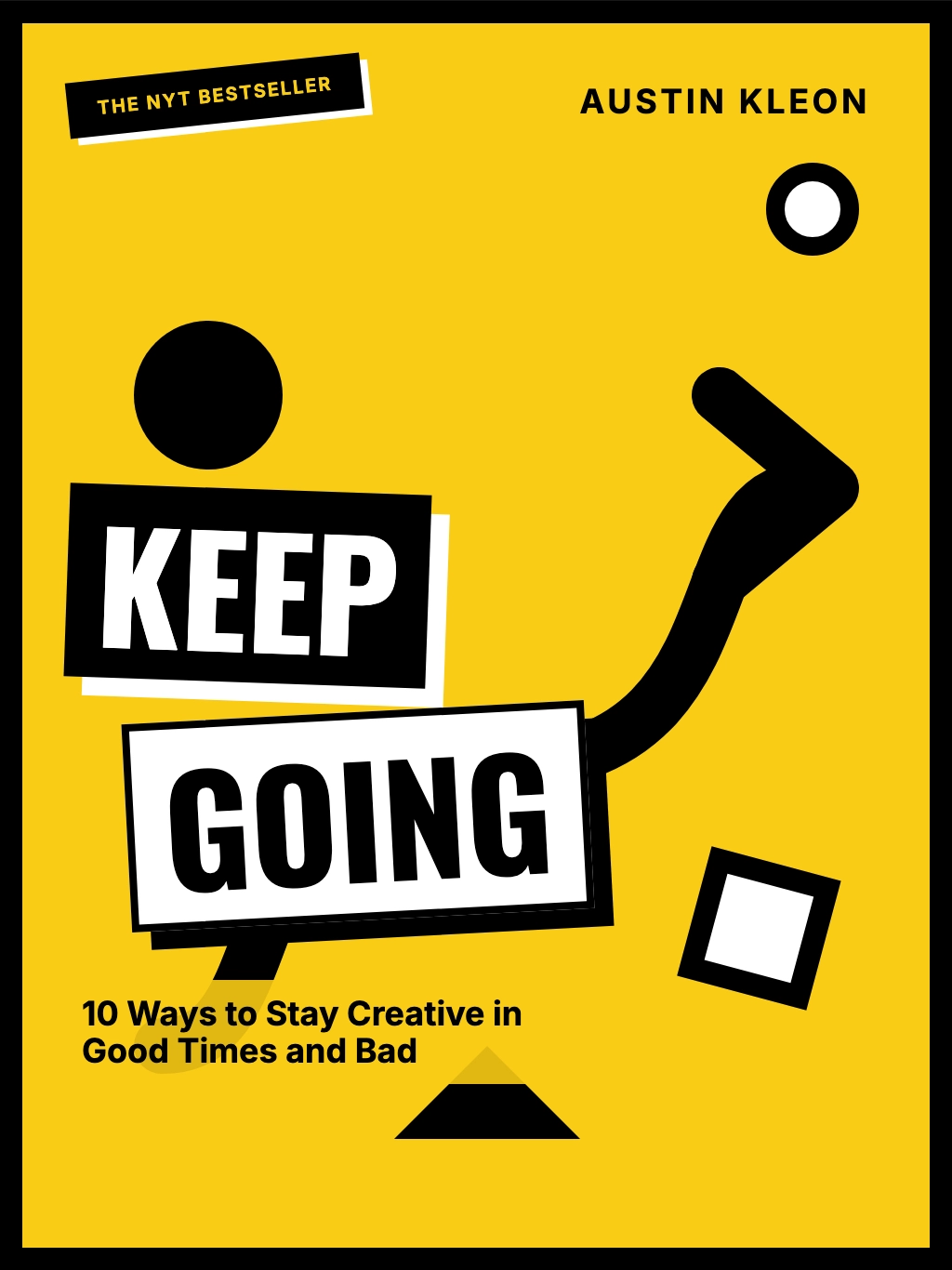
We're exploring Austin Kleon's 'Keep Going,' a book that isn't about relentless productivity, but about building resilience and finding peace in the process. It's an invitation to cultivate a creative life that endures, one small, intentional step at a time.
Austin Kleon is someone many of you might already know. He's the author of 'Steal Like an Artist' and 'Show Your Work!,' two books that have become staples for creatives and anyone looking to navigate the modern world with a bit more wisdom.
'Keep Going' feels like the natural third act in this series. If 'Steal Like an Artist' was about finding your voice and 'Show Your Work!' was about sharing it, then 'Keep Going' is about sustaining that voice and that work over the long haul.
It emerged from a time when Kleon himself felt overwhelmed by the constant noise and demands of the digital age. He realized that the advice to 'keep going' often lacked the nuance of how to do it without burning out or losing your way.
Chapter 2 of 7
So, this book is his thoughtful response, a collection of strategies for staying creative, sane, and productive in a world that often feels anything but.
One of the core ideas Kleon introduces, and it's a beautiful one, is what he calls 'Cultivating Your Daily Garden.' This concept suggests that true resilience and creative momentum aren't built in grand, dramatic gestures.
Instead, they grow through the quiet, consistent act of simply showing up for your work, day after day, regardless of external circumstances.
It's about the internal battle we all face: waiting for that perfect, uninterrupted block of time, or a sudden burst of inspiration. But Kleon argues for the profound power of committing to a small, non-negotiable daily practice.
Think of a writer, for example, who instead of waiting for a full weekend to tackle their novel, commits to just 20 minutes of writing every morning. They do this before the day truly begins, before the emails and demands start rolling in.
Some days, those 20 minutes might produce brilliant prose; other days, it might just be a few clumsy sentences. But the act itself, the consistent showing up, builds an unbreakable habit and a quiet sense of accomplishment.
It's like a gardener who tends to a small plot daily. They water, they weed, they observe, rather than waiting for ideal weather to plant an entire field all at once.
Chapter 3 of 7
Those consistent, small efforts yield a steady harvest, far more reliably than sporadic, grand gestures. This really matters because it shifts our focus from outcome to process.
It reminds us that consistency, even in small doses, is a powerful force for progress and well-being. Moving on from the daily garden, Kleon also champions what he calls 'The Strategic Retreat.'
This isn't about giving up or quitting; it's about understanding that stepping away, disconnecting, and allowing for periods of rest and reflection are crucial. It's a strategic move that recharges your creative batteries and offers fresh perspective.
The tension here is the pervasive societal pressure to always be 'on,' always productive, always connected. This clashes with our innate human need for quiet, solitude, and genuine disconnection to process and regenerate.
Think of an artist feeling utterly stuck on a painting. Instead of forcing it, they decide to take a long walk in the woods, visit a museum, or simply spend an afternoon reading a non-related book.
Often, the solution or a new direction emerges not from staring harder at the canvas, but from stepping completely away. It's like a ship returning to port for resupply, maintenance, and a chance for the crew to rest.
It's not abandoning the journey; it's preparing for the next leg of the voyage, ensuring it can withstand future storms. This idea is vital because it reframes rest not as a luxury, but as a fundamental component of sustained creative output.
Chapter 4 of 7
It gives us permission to pause, to breathe, and to trust that stepping back can actually propel us forward. Another powerful concept in 'Keep Going' is what Kleon calls 'The Joy of the Verb.'
This encourages us to free ourselves from the pressure of being 'a noun' - like 'a writer,' 'an artist,' or 'an entrepreneur.' Instead, we embrace the simple, liberating act of 'the verb' - writing, making, building, creating.
The tension here lies in our desire to achieve a grand title or identity, with all its inherent expectations and fears of failure. This often overshadows the simple, unburdened pleasure and progress found in just doing the work itself.
Imagine someone who stops agonizing over being 'an aspiring novelist' and simply starts 'writing 500 words a day.' The focus shifts from the daunting label to the manageable, enjoyable action.
This leads to more consistent output and, crucially, less self-judgment. It's like a child playing with building blocks. They aren't trying to be 'an architect'; they're simply enjoying the act of stacking, creating, and experimenting.
They find joy in the process itself, not in the eventual title or recognition. Embracing the verb allows us to engage with our work more authentically and consistently. It removes the heavy weight of identity and replaces it with the lightness of action.
Building on these ideas, Kleon also emphasizes the importance of 'Building Your Own World.' This isn't about isolating yourself, but about creating boundaries and curating your inputs.
Chapter 5 of 7
In a world constantly vying for our attention, protecting your creative space and focus becomes paramount. The tension here is between the desire to stay informed and connected, and the necessity of shielding yourself from the overwhelming noise.
It's about recognizing that not all information is helpful, and some can actively hinder your creative flow. Consider a musician who intentionally limits their time on social media or news sites, especially during their creative hours.
They might choose to consume only specific, inspiring content, or even dedicate certain days to complete digital detox. This isn't ignorance; it's a conscious choice to protect their inner landscape.
It's like an editor carefully selecting which stories make it into a publication, knowing that every piece affects the overall tone and message. You become the editor of your own mental and creative environment.
This practice allows for deeper work, clearer thinking, and a more robust creative spirit, less susceptible to external chaos. Finally, a thread woven throughout 'Keep Going' is the idea of 'Staying Curious and Open.'
This is about embracing a beginner's mind, continuously learning, and allowing yourself to be surprised by new discoveries. It's a powerful antidote to burnout and creative stagnation.
The tension often arises when we feel we should already know everything, or that we've mastered our craft. This can lead to a closed-off mindset, where new ideas are rejected rather than explored.
Chapter 6 of 7
Think of a seasoned chef who, despite years of experience, still experiments with new ingredients or cuisines. They might take a class in a completely different culinary tradition, not to become an expert, but to spark new ideas for their own cooking.
This keeps their passion alive and their skills evolving. It's like a scientist who, even after a major breakthrough, remains fascinated by unanswered questions, always looking for the next puzzle to solve. Their curiosity fuels their continued exploration.
This openness ensures that our creative journey remains fresh and exciting, preventing the dullness that can creep in with routine. So, how do all these ideas connect together?
Kleon shows us that cultivating your daily garden provides the consistent foundation. The strategic retreat ensures you don't deplete your resources. Embracing the joy of the verb keeps you engaged without the burden of identity.
Building your own world protects your inner sanctuary from external chaos. And staying curious and open ensures your well of inspiration never runs dry. They form a holistic approach to sustaining a creative life, not just enduring it.
What makes 'Keep Going' truly different from many other books on creativity or productivity is its gentle, almost anti-hustle approach. It doesn't preach relentless effort or grand ambition.
Instead, it offers practical, humane strategies for navigating the inevitable ups and downs of a creative life. It acknowledges the chaos of the world but provides tools to create pockets of calm and consistency within it.
Chapter 7 of 7
It's less about 'doing more' and more about 'doing smarter' and 'doing kinder' to yourself. This matters so much in real life because we're all trying to navigate an increasingly complex and noisy existence.
Whether you're an artist, a parent, a student, or simply someone trying to live a more intentional life, the principles in 'Keep Going' are universally applicable.
They offer a roadmap for not just surviving, but thriving, even when the world feels like it's spinning out of control. It reminds us that our well-being is intrinsically linked to our ability to create and contribute.
And in the end, 'keeping going' isn't about grinding harder or ignoring the world's chaos. It's about cultivating a sustainable rhythm, honoring your need for rest, and finding the quiet joy in the daily act of creation.
It's about building a personal ecosystem that allows your creative spirit to not just survive, but truly thrive. No matter what storms may rage outside, Austin Kleon's 'Keep Going' offers a gentle, yet firm, hand to guide you through.
Outro
It's a reminder that the most powerful act of creation might just be the act of showing up, again and again, with kindness and intention.