Chapter 1 of 6
Intro
Remember that feeling of endless possibility? That sense of the open road stretching out before you, promising discovery, adventure, and a fresh start? It's a powerful image, deeply embedded in the American psyche.
But what if that road, or at least the spirit of it, is slowly fading from view? What if it's being replaced by something less certain, less free, and perhaps a little more unsettling?
That's the quiet, yet profound question at the heart of Sarah Kendzior's work, particularly as we explore the themes that resonate through her observations.
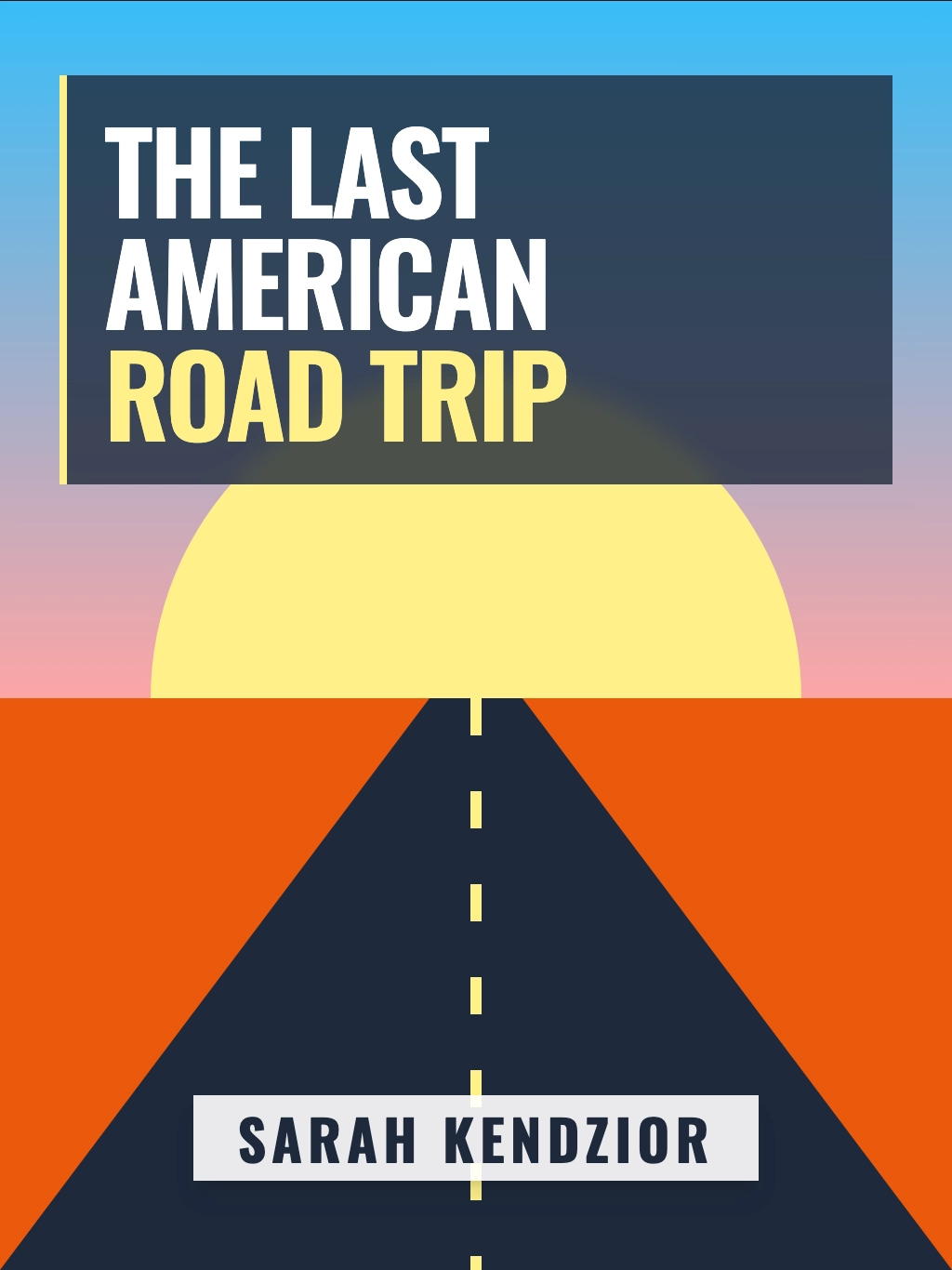
This isn't a book in the traditional sense, but a collection of insights that coalesce around a central idea: the subtle, often unnerving shifts happening in our collective experience. It's about how the iconic 'American road trip' itself feels different now.
Less like an adventure into the unknown, and more like a journey through a landscape of fading dreams and growing anxieties. It reflects a deeper societal transformation that many of us feel, even if we can't quite articulate it.
Sarah Kendzior, as an author and journalist, has a unique lens through which she views these changes. Her background often involves looking at power structures, authoritarianism, and the erosion of democratic norms.
This perspective isn't about grand political statements in this context, but rather how those larger forces trickle down into our everyday lives. She's not just reporting on events; she's observing the emotional and psychological toll of a society in flux.
Chapter 2 of 6
This book, or rather, this collection of ideas, exists because there's a palpable sense that something fundamental has shifted. It's an attempt to name and understand the quiet anxieties that hum beneath the surface of modern life.
One of the core ideas that emerges from this perspective is what we might call 'The Vanishing Open Road'. It speaks to the physical and metaphorical spaces that once represented freedom, spontaneity, and boundless possibility.
These spaces, the book suggests, are shrinking. They're being replaced by barriers, by increased surveillance, or simply by a pervasive sense of exhaustion and predictability.
Think about the tension here: the deep human yearning for boundless exploration and the thrill of the unknown. We all have that desire to just get in the car and go, right?
But that yearning now bumps up against the reality of increasingly constrained movement. Routes feel more predictable, and the landscape itself seems less welcoming to true discovery. A real-life scenario might be considering a spontaneous detour.
Do those detours feel as safe or appealing as they once did? Or perhaps you've driven through once-vibrant small towns along old highways, only to find them boarded up, making the journey feel less about discovery and more about passing through decay.
It's like a once-clear highway map slowly being overwritten by a tangled web of detours, dead ends, and private property signs. The grand, sweeping routes of yesteryear start to feel like relics, rather than invitations.
Chapter 3 of 6
And this is where the book starts to go deeper, suggesting that this isn't just about physical roads. It's about the pathways in our lives, the opportunities, the sense of upward mobility, or even just the freedom to imagine a different future.
Another powerful idea that emerges is what Kendzior's observations point to as 'The Broken Compass of Shared Reality'. This concept suggests that our collective understanding of where we're going, or even where we are right now, has fractured.
It makes it increasingly difficult for us to navigate together, or even to agree on a common destination or purpose as a society. The tension here is profound: we have this innate desire for collective purpose, for a shared direction.
But that's constantly battling against the overwhelming noise of conflicting narratives. There's individual isolation, and a fundamental disagreement on even basic facts about our society's trajectory.
Imagine trying to plan a road trip with friends or family where everyone has wildly different ideas about the destination, the route, and even the very purpose of the journey.
It often leads to paralysis, separate paths, or constant low-level conflict, doesn't it? On a broader scale, this is about our inability to agree on basic truths about the country's direction or its challenges.
It's like a group of travelers, each holding a different, contradictory map, arguing about which way is north while the car runs out of gas. They can't move forward because they can't even agree on their starting point, let alone their destination.
Chapter 4 of 6
This part is easy to miss, but it's important because it highlights how deeply this fracturing affects our ability to even conceive of a shared future. It's not just about political divides; it's about a fundamental disorientation.
And then, there's the idea of 'The Weight of the Unseen Passenger'. This insight suggests that we're all carrying the burdens of societal anxieties, economic pressures, and a pervasive sense of collective loss.
Even a journey meant for freedom, like a road trip, feels heavy, constrained, and less joyful because of these unseen burdens. The tension here is between the romantic ideal of escaping it all on the open road, leaving worries behind.
Versus the inescapable reality of personal and collective anxieties that ride along with us. Making that escape feel temporary, or even superficial. You might be driving through beautiful scenery, but find yourself unable to fully enjoy it.
Your mind is preoccupied with news headlines, financial stress, or just that nagging feeling that something fundamental has shifted in the world.
This makes the freedom of the road feel less liberating and more like a temporary distraction from deeper concerns. It's like a car packed not just with luggage, but with invisible suitcases filled with worries, doubts, and the ghosts of past promises.
This makes the vehicle feel sluggish, and the journey less about adventure and more about carrying a heavy load. These three core ideas-the vanishing road, the broken compass, and the unseen passenger-they don't exist in isolation.
Chapter 5 of 6
They intertwine and amplify each other, creating this pervasive atmosphere of uncertainty. The shrinking physical spaces of freedom contribute to our sense of disorientation.
And that disorientation, in turn, makes the weight of our anxieties feel even heavier. It's a feedback loop, where each element reinforces the others, making the journey forward feel increasingly complex.
What makes this particular perspective so compelling is that it's not just a critique of current events. It's a deeply human observation of how those events are experienced on a personal, emotional level.
It avoids the trap of overly academic language or partisan rhetoric. Instead, it speaks to a shared, often unspoken, feeling that many of us carry. It's different because it doesn't offer easy answers or a five-step plan to fix things.
Instead, it offers a framework for understanding the discomfort, the unease, and the sense of loss that permeates our modern landscape. This matters in real life because acknowledging these shifts is the first step toward navigating them.
If we pretend the road hasn't changed, or that our compass is still true, we risk getting lost in a way that's far more profound than just missing an exit.
It helps us understand why certain conversations feel so difficult, why collective action seems so elusive, and why even moments of joy can feel tinged with an underlying melancholy.
Chapter 6 of 6
It gives a name to the feeling that the world we grew up in, or the world we were promised, is no longer quite there. Perhaps the 'last American road trip' isn't about a final journey in a literal sense.
It's more about a profound shift in how we understand our path forward, both individually and collectively.
It's an invitation to acknowledge the changes, to feel the weight of those unseen passengers, and to consider what kind of map we'll need to draw for whatever comes next.
Outro
Even if it's a journey we take more thoughtfully, and perhaps, more alone, in a landscape that feels both familiar and profoundly new. It's about recognizing that the adventure isn't gone, but its nature has fundamentally transformed.