Chapter 1 of 8
Intro
We often think of leadership as being at the very top, making the big calls, enjoying all the perks that come with that position. It's a common image, isn't it? The leader as the one who gets to go first, who takes the biggest share.
But what if true leadership means something far more fundamental, something that actually goes against our instincts, yet unlocks incredible potential? What if the most effective leaders are the ones who, quite literally, eat last?
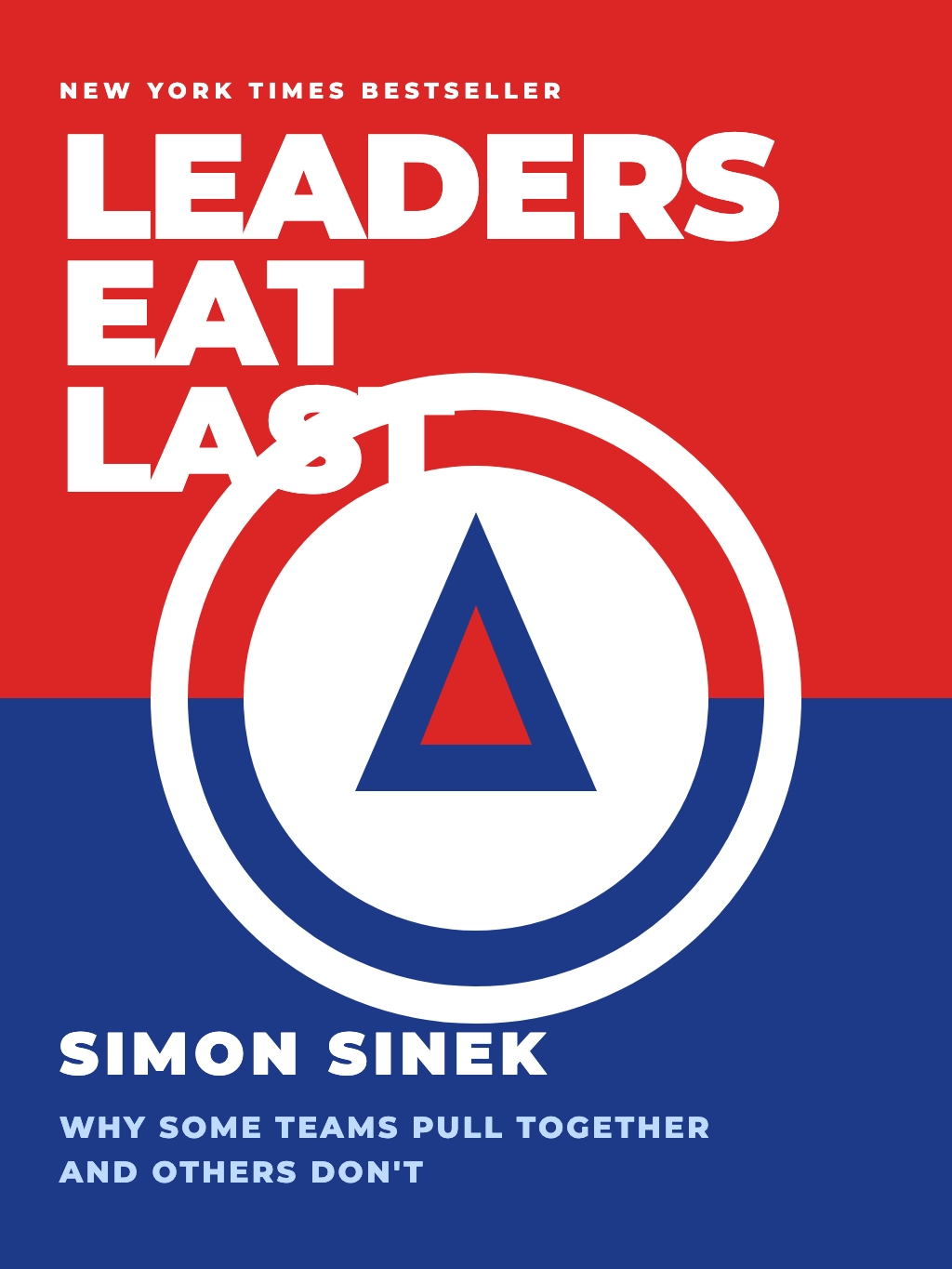
That's the profound question at the heart of Simon Sinek's powerful book, 'Leaders Eat Last'. This isn't just a catchy title; it's a deep dive into how genuine leadership fosters environments built on trust and psychological safety.
It explores how prioritizing people over profits, or even personal gain, leads to stronger teams and more resilient organizations.
Today, we're going to delve into this idea, examining why this human-centric approach isn't just good ethics, but a powerful strategy for success and well-being.
It's about understanding that a leader's primary role is to create what Sinek calls a 'Circle of Safety' for their team. Simon Sinek, for those unfamiliar, is a renowned author and speaker, perhaps best known for his concept of 'Start With Why'.
He's spent years studying what makes great organizations and great leaders tick, often drawing on biology and anthropology to explain human behavior.
Chapter 2 of 8
His work often challenges conventional wisdom, pushing us to look beyond surface-level metrics and into the deeper, more human aspects of work.
'Leaders Eat Last' really builds on that foundation, taking the 'why' of leadership and applying it to the 'how' of creating thriving cultures.
He argues that our workplaces should feel like safe havens, much like our ancestors' tribes, where everyone looked out for each other. This book exists because Sinek observed a fundamental disconnect in many modern organizations.
Despite all our advancements, many workplaces are still places of stress, fear, and disengagement. He wanted to understand why some teams flourish with loyalty and innovation, while others struggle with internal politics and high turnover.
And his conclusion points directly to the quality of leadership and the environment it creates. One of the core ideas, and perhaps the most foundational, is what Sinek calls 'The Invisible Wall: Building the Circle of Safety'.
Now, when we think of protecting our team, we often think about external threats, right? Protecting them from competitors, market shifts, or economic downturns.
But Sinek argues that true leadership isn't just about shielding your team from those outside forces. It's primarily about protecting them from internal threats.
Chapter 3 of 8
What does that mean? It means protecting them from the fear of job loss, from office politics, or from the anxiety of a demanding, unpredictable boss.
It's about creating a psychological sanctuary where people feel safe enough to be themselves, to speak up, and to take risks without fear of reprisal.
This 'Circle of Safety' is essentially an environment where trust is paramount, and vulnerability is not punished. Why does this matter so much? Because when people feel safe, their energy is freed up to focus on the work itself.
They're not constantly looking over their shoulder, worried about internal threats. They can innovate, collaborate, and commit fully to the shared mission. And this is where the book starts to go deeper, challenging a common belief.
We often believe that a competitive, 'sink or swim' internal environment drives performance. The idea is that if people are constantly vying for position, they'll work harder.
The tension here is that this approach, while seemingly efficient on the surface, actually drains energy and creativity. It makes teams less effective against real external challenges, because they're too busy fighting each other.
Imagine a workplace where employees are constantly looking over their shoulders, afraid to make mistakes, or worried about their job security.
Chapter 4 of 8
Compare that to a team where everyone feels supported, knows their voice matters, and trusts their leaders to have their back, even when things get tough. The difference in output, in morale, in resilience, is staggering.
Sinek uses a powerful metaphor for this: it's like a huddle in a storm. Outside, the wind howls and the rain beats down, representing all those external market pressures.
But inside the huddle, everyone is protected, focused on the shared goal, and ready to face the elements together. They can do this because they trust the people around them, and crucially, they trust their leader to maintain that huddle.
This trust allows them to direct their energy outward, towards the storm, rather than inward, towards each other. Moving on from the 'Circle of Safety', the book then explores how this circle is actually built, and it's not just with rules or policies.
This brings us to the second core idea: 'Beyond Metrics: Leading with a Human Heart'.
The 'Circle of Safety' isn't built with policies and procedures alone; it's forged through genuine empathy, understanding, and a leader's willingness to see their team members as whole people. They're not just cogs in a machine, or numbers on a spreadsheet.
They are individuals with lives, families, dreams, and struggles outside of work. This means taking the time to truly listen, to understand their perspectives, and to offer support when it's needed.
Chapter 5 of 8
It's about recognizing that human beings are not purely rational economic actors. We are emotional creatures, and our emotions profoundly impact our performance and engagement.
In a world obsessed with data, KPIs, and efficiency, there's a constant pressure to depersonalize work. We're told to focus on the numbers, to optimize processes, to remove the 'human element' that might introduce variability.
The tension lies in balancing the very real need for results with the fundamental human need for connection and belonging. This human element often seems 'soft' or inefficient to those focused purely on metrics.
But Sinek argues it's precisely this 'soft' stuff that creates the hard results. Think of a manager who only cares about hitting targets, pushing their team relentlessly without regard for their well-being.
Now, compare that to a leader who checks in on their team's well-being, offers support during personal crises, and celebrates small victories, not just big wins.
Which team do you think is more resilient when faced with a challenge? Which team is more committed in the long run? It's clear that the human-centered approach fosters deeper loyalty and engagement.
Sinek beautifully illustrates this by saying that empathy is the mortar that binds the bricks of the Circle of Safety. Without it, the walls crumble, no matter how strong the individual bricks, or employees, might be.
Chapter 6 of 8
It's the invisible glue of human connection that holds everything together. This brings us to the ultimate expression of this leadership philosophy, captured in the book's title itself. The third core idea is 'The Ultimate Sacrifice: Leadership as Service'.
The phrase 'leaders eat last' isn't just a catchy slogan; it embodies the profound responsibility of leadership. It means prioritizing the well-being and success of your team above your own comfort, your own recognition, or even your own immediate gain.
It's a mindset where the leader sees themselves as a servant to their team, rather than the other way around. This means making sacrifices, sometimes small, sometimes significant, for the benefit of the group.
It's about putting the needs of others before your own, consistently and authentically. Our societal narrative often glorifies individual achievement and the perks of power.
We're taught that success means getting to the top, having the corner office, and being served. The tension here is the counter-intuitive idea that true power and influence come not from taking first, but from serving last.
It's about understanding that by putting others' needs before your own, you build a level of trust and loyalty that far outweighs any short-term personal gain. Consider a crisis situation within an organization.
Does the leader hoard resources or critical information, trying to protect their own position? Or do they ensure their team has everything they need first, even if it means personal inconvenience or risk?
Chapter 7 of 8
Does a leader take all the credit for success, or do they deflect it to their team, celebrating their contributions? The 'eating last' principle is evident in these moments of choice, in the small, everyday decisions that reveal a leader's true priorities.
Sinek offers a beautiful metaphor for this, comparing it to a parent feeding their children before themselves. It's a primal act of protection and provision, ensuring their safety and nourishment even when the parent is tired or hungry.
This isn't just a nice sentiment; it's a deep, biological imperative that, when extended to the professional realm, creates incredibly strong bonds. So, how do all these ideas connect together? The 'Circle of Safety' is the environment, built on trust.
Leading with a 'Human Heart' is the method, using empathy and understanding. And 'Leadership as Service,' or eating last, is the ultimate demonstration of that commitment.
They form a virtuous cycle where a leader's selflessness creates safety, which fosters trust, which in turn inspires loyalty and high performance from the team.
It's a holistic view of leadership that recognizes the interconnectedness of human well-being and organizational success. What makes 'Leaders Eat Last' truly different from many other leadership books?
It's not just a collection of best practices or a list of traits to emulate. Sinek grounds his arguments in biology and anthropology, explaining why these principles work at a fundamental human level.
Chapter 8 of 8
He talks about the chemicals in our brains - endorphins, dopamine, serotonin, oxytocin, and cortisol - and how leadership behaviors impact their release. This scientific backing gives the book a unique depth and credibility, moving beyond mere anecdote.
It explains that creating a safe environment isn't just 'nice'; it's literally how our brains are wired to thrive. So, why does all of this matter in our real lives, whether we're formal leaders or not?
Because these principles apply to any group dynamic, from a small team project to a family unit. Understanding the 'Circle of Safety' helps us identify toxic environments and seek out or create healthier ones.
It empowers us to advocate for more human-centered approaches in our workplaces. And for those in leadership positions, it offers a clear, actionable framework for building truly resilient, innovative, and loyal teams.
It's a reminder that the greatest impact often comes not from wielding power, but from serving those you lead. And in the end, 'Leaders Eat Last' isn't just a book title; it's a profound invitation to rethink what leadership truly means.
It's a call to build a world where everyone feels safe, valued, and empowered to contribute their best. Not out of fear, not out of obligation, but out of genuine trust and a deep sense of belonging.
Outro
And that, perhaps, is the most powerful and enduring legacy any leader can leave behind. It's a legacy that extends far beyond quarterly reports or individual achievements, touching the very human spirit of those they serve.